Farry Typeface: Capturing Holiday Magic in Every Letter
There is a specific kind of visual warmth that defines the holiday season—think twinkling lights against a snowy evening, the rich red of a velvet ribbon, and the playful bounce of a child’s laughter. Translating that feeling into a design project requires more than just a standard font; it requires a typeface with personality. Enter Farry, a decorative display font that doesn't just spell out words; it whispers stories of cozy winter nights and festive celebrations. For designers, small business owners, and creatives, finding a typeface that balances whimsy with functionality is often the key to unlocking a project's full potential.
Visualizing the Spirit: What Makes Farry Unique?
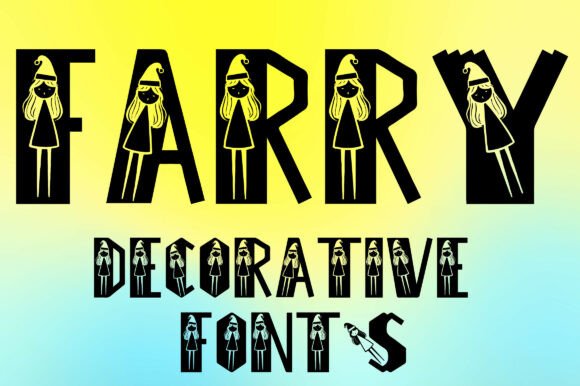
At its core, Farry is a handwritten font that draws heavy inspiration from the adorable, rosy-cheeked aesthetic of Christmas illustrations. However, unlike many seasonal typefaces that rely on heavy, blocky serifs or overly complex scripts that become illegible at smaller sizes, Farry strikes a delicate balance. The letterforms feature soft, rounded edges and a bouncy baseline that mimics natural handwriting. It captures the "cute" factor without sacrificing the structural integrity of the text.
The visual appeal lies in its decorative style. It isn't just a script; it is a display font designed to be the focal point. The characters often feature subtle quirks—perhaps a slightly elongated tail on the 'y' or a looped stem on the 'h'—that give it a hand-crafted feel. This makes it an excellent alternative to rigid serif fonts or sterile sans serif fonts when the goal is to evoke emotion. It translates the abstract concept of "holiday cheer" into tangible modern typography.
Practical Applications for Branding and Packaging
For small business owners, particularly those in the artisanal, food, or gift sectors, brand identity is everything. Farry offers a unique opportunity to infuse a brand with personality, especially during the Q4 holiday rush.
Consider packaging design. If you are selling homemade jams, candles, or holiday cookie kits, the label needs to stand out on a crowded shelf. Using Farry for your product name or tagline immediately signals to the customer that the product is handmade, thoughtful, and festive. It pairs beautifully with kraft paper textures or matte finishes, reinforcing the tactile experience of the product.
Furthermore, in logo design, a typeface like Farry can serve as the primary wordmark for seasonal campaigns. A coffee shop launching a "Winter Wonderland" menu or a boutique releasing a holiday collection can use Farry to create a temporary logo variation. This keeps the brand feeling fresh and relevant without abandoning the core identity. It creates an instant connection with the audience, leveraging the psychological power of nostalgia and seasonal joy.
Digital Presence: Social Media and Web Design
In the fast-paced world of digital marketing, capturing attention within the first few seconds is critical. Social media graphics benefit immensely from distinct typography. When scrolling through an Instagram feed, a quote or announcement set in Farry breaks the visual monotony. It is particularly effective for "swipe-up" stories, promotional banners, and holiday countdowns.
However, it is important to apply readability considerations. Because Farry is a decorative style typeface, it is best used for headers, sub-headers, and call-to-action buttons rather than long-form body copy. Imagine a holiday landing page: the main headline ("Season’s Greetings") is set in Farry to draw the eye, while the product description below uses a clean sans serif font for easy reading. This contrast creates a visual hierarchy that guides the user’s eye naturally down the page.
For web design, this typeface adds a layer of warmth that sterile corporate fonts cannot replicate. It softens the user experience, making a website feel more like a welcoming home than a digital storefront. Whether you are designing a digital invitation for a Zoom holiday party or a banner for a charity fundraiser, Farry provides the necessary festive flair.
Editorial Design and Print Materials
Beyond the screen, Farry shines in traditional print materials. Editorial design for holiday magazines, church bulletins, or community newsletters often struggles with finding imagery that feels fresh year after year. Typography offers a solution. By using a premium font like Farry for pull quotes, drop caps, or section dividers, an editor can instantly update the look of a publication.
It is also a powerhouse for merchandise. Think about T-shirts, tote bags, or mugs sold at holiday craft fairs. A witty phrase or a festive greeting rendered in Farry becomes a design asset in itself. The font carries enough visual weight to stand alone without needing complex illustrations. For invitations—whether for weddings with a winter wonderland theme or children's birthday parties—the typeface sets the tone immediately, telling the guest exactly what kind of event to expect before they even read the details.
The Art of Pairing: Mixing Farry with Other Typefaces
One of the most common pitfalls in creative font usage is isolation. A decorative font rarely works well entirely on its own for a full project. The secret to professional typography is mastering the font pairing.
Farry works exceptionally well when grounded by a structured companion. Because Farry is organic and round, it contrasts beautifully with a geometric sans serif font. The clean lines of the sans serif allow the details of Farry to pop without overwhelming the viewer. Conversely, if you are aiming for a vintage, nostalgic aesthetic, pairing Farry with a classic serif font can create a look reminiscent of old storybooks or vintage holiday postcards.
When testing your pairings, pay attention to the x-height and weight. You want the fonts to feel like they belong in the same family, even if they look different. A helpful tip is to use Farry for the "emotional" parts of your design (headlines, quotes) and the secondary font for the "informational" parts (dates, addresses, body text). This ensures your brand identity remains cohesive across all marketing assets.
Practical Tips for Implementation
Before integrating Farry into your workflow, it is wise to review the specific features of the typeface. Check if the premium font includes alternate characters or ligatures. Many high-quality display fonts include stylistic alternates that allow you to customize the look of specific letters, preventing repetition in longer words and adding a truly hand-lettered feel.
Additionally, always verify your commercial licensing. If you are using Farry for client work, merchandise for sale, or digital products like PDF planners, ensure your license covers these applications. This is a non-negotiable aspect of professional design that protects both you and the font creator.
Finally, test the font in context. Don't just look at it in your design software; mock it up. Place the text on a photo of a gift box or overlay it on a digital mockup of a business card. Seeing how the font interacts with colors, textures, and images will help you decide if it truly fits the project's goals.
Ultimately, typography is a silent ambassador for your project. While a handwritten font like Farry brings the energy and joy of the holidays, its true value lies in its ability to communicate a feeling instantly. By using it thoughtfully and pairing it wisely, you can transform standard designs into memorable experiences that resonate with your audience long after the season has passed.