Botanica Box: A Floral Monogram Font for Modern Creators
There's a particular kind of design challenge that comes up again and again. You need something that feels personal, elegant, and a little bit special—but not fussy. Not overdone. Something that whispers sophistication rather than shouting it. If you've ever stared at a blank Canva template or a fresh Cricut canvas wondering how to make a monogram or logo feel both polished and organic, you've probably gone through dozens of display fonts that either lean too corporate or too whimsical. That gap between sterile minimalism and excessive ornamentation is exactly where Botanica Box lives.
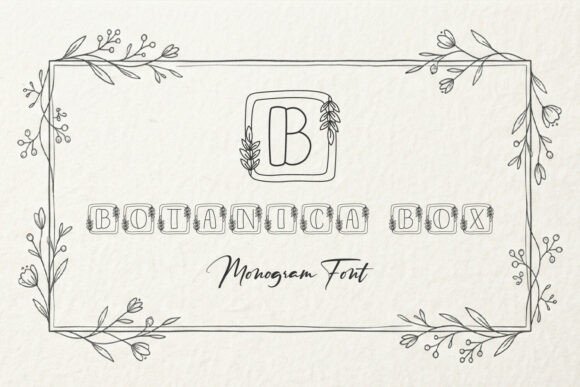
At its core, Botanica Box is a decorative monogram typeface built around uppercase letters framed by delicate botanical line art. Think thin, hand-drawn stems, subtle leaf motifs, and clean geometric borders that wrap each character like a tiny wreath. The lettering itself sits comfortably between a modern serif and a structured sans serif—nothing too traditional, nothing too trendy. It's the kind of font that makes you pause mid-scroll on Instagram or linger over a wedding invitation just a beat longer than usual.
Why Botanical Accents Work So Well in Modern Design
Floral and botanical elements have always carried symbolic weight. Growth, beauty, nature, new beginnings—they tap into something instinctive. But the reason they've become so prevalent in contemporary branding and editorial design isn't just sentimentality. Botanical details add organic texture to otherwise flat digital layouts. They create visual warmth in spaces that might otherwise feel cold or overly geometric.
What makes Botanica Box different from a standard script font with a floral illustration tacked on is integration. The botanical accents aren't afterthoughts. They're designed as part of the letterform itself. Each character exists within its own framed composition, which means you're not just getting a font—you're getting a series of small, complete design elements. For anyone working on logo design, packaging design, or even simple social media graphics, that kind of built-in visual structure saves enormous amounts of time.
Consider a small business owner creating product labels for a handmade candle line. Rather than commissioning custom illustrations and then finding a separate typeface that complements them, Botanica Box provides both the lettering and the decorative framing in a single asset. The result feels cohesive and intentional, which is exactly what separates amateur-looking branding from professional presentation.
Practical Applications Across Creative Projects
The versatility of a typeface like this is worth examining closely. It's not a workhorse font for body copy—you wouldn't set a blog post or a product description in it. But for display purposes, headline treatments, and standalone monogram designs, it opens up a surprisingly wide range of possibilities.
Wedding and Event Invitations: This is perhaps the most natural fit. Monogram fonts with floral framing have been a staple of stationery design for decades, but Botanica Box feels distinctly current. The clean hand-drawn quality avoids the overly ornate look of vintage calligraphy fonts while still delivering that sense of occasion. Couples looking for something that photographs well on Instagram and prints beautifully on textured cardstock will find it works across both digital and physical formats.
Brand Identity and Logo Design: For boutique businesses—florists, skincare brands, artisan bakeries, wellness studios, interior designers—a monogram logo built with Botanica Box can serve as a primary mark or a secondary brand element. The framed letter style gives each initial a self-contained quality, which makes it adaptable across different contexts. Use it on a website header, stamp it on packaging, embroider it on merchandise. The design holds up because it doesn't rely on complex color or shading—it's fundamentally a line-drawing approach that scales well.
Social Media and Digital Content: Content creators and marketers often struggle with maintaining visual consistency across platforms. A font like Botanica Box, used consistently for featured quotes, announcement graphics, or profile highlights, creates an instantly recognizable visual thread. It's distinctive enough to stand out in a crowded feed but restrained enough to avoid clashing with photography or other design elements.
Cricut Crafts and DIY Projects: The crafting community has embraced decorative monogram fonts enthusiastically, and for good reason. Whether you're cutting vinyl decals for tumblers, creating iron-on transfers for tote bags, or designing layered paper art, a font with built-in framing simplifies the design process considerably. Botanica Box's clean lines translate well to cutting machines, and the botanical details add visual interest without creating overly intricate cut paths that cause problems with delicate materials.
Print Materials and Editorial Layouts: Think beyond invitations. Chapter openers in self-published books, section headers in lookbooks, pull quotes in magazine-style layouts, featured product callouts in catalogs—anywhere you need a moment of visual emphasis that feels elevated rather than utilitarian, this kind of decorative typeface earns its place in your design assets collection.
Pairing Botanica Box with Other Typefaces
No single font does everything, and understanding how to pair typefaces is one of the most practical skills in any designer's toolkit. Botanica Box, as a display font with strong decorative qualities, works best when balanced with something simpler for supporting text.
A clean sans serif like Montserrat, Lato, or Poppins provides excellent contrast for body copy, captions, and secondary information. The simplicity of the sans serif lets the botanical monograms remain the visual focal point without competing for attention. For projects that call for a slightly warmer feel, a humanist sans serif or a light-weight serif font can bridge the gap between the organic quality of the decorative type and the functional demands of readable paragraphs.
When testing font pairings, set your monogram or headline in Botanica Box and then place your body text options directly beneath it. Look at the overall rhythm. Does the combination feel balanced, or does one element overpower the other? Does the x-height of your body font create a comfortable visual relationship with the decorative uppercase? These small details compound across a full design and determine whether a project feels harmonious or disjointed.
It's also worth noting that Botanica Box works beautifully as a standalone element. Not every design needs a headline-body pairing. A single monogram on a gift tag, a wax seal stamp, or a social media avatar can speak for itself. Sometimes the most powerful typographic choice is restraint.
Readability and Licensing Considerations
Let's be honest about something. Decorative fonts like Botanica Box are not designed for extended reading. They're designed for impact, for atmosphere, for that first impression that draws someone into a design. Using them appropriately means understanding their limitations. A monogram set in Botanica Box on a wedding invitation? Perfect. The same font used for the event details, date, time, and RSVP information? That's going to create readability problems. Always pair decorative display typefaces with legible alternatives for functional text.
Size matters too. The botanical details in a font like this need room to breathe. Set it too small, and those delicate stems and leaves will blur into an indistinct mass, especially in print. Give it space. Let it be the design element it's meant to be rather than cramming it into a context where its strengths become weaknesses.
On the licensing side, anyone planning to use Botanica Box for commercial projects—client work, products for sale, marketing materials—should verify that the license covers their intended use. Most premium font licenses distinguish between personal and commercial use, and some have specific terms around embedding in digital products or merchandise. It's a five-minute check that prevents headaches down the road, especially for small business owners and freelancers who are building a brand on a budget and can't afford to discover a licensing issue after a product launch.
Building a Cohesive Visual Language
The real value of a typeface like Botanica Box isn't just aesthetic—it's strategic. When used consistently across touchpoints, a distinctive font becomes part of how your audience recognizes and remembers you. That monogram on your Instagram highlights reappears on your thank-you cards. The botanical framing that caught someone's eye on Pinterest shows up again on your product packaging. Each repetition reinforces the association between your visual identity and the qualities the font communicates: care, craftsmanship, natural beauty, attention to detail.
This is what brand identity actually looks like in practice. It's not a logo file sitting in a folder. It's the accumulated effect of consistent visual choices made across every place your audience encounters your work. A thoughtfully chosen font, applied with discipline and paired with complementary design assets, becomes one of the most cost-effective tools in building that consistency.
Whether you're a designer building mood boards for a client, an entrepreneur launching a product line, or a hobbyist creating handmade gifts for friends and family, the fonts you choose communicate something before a single word is read. Botanica Box communicates warmth, elegance, and a connection to the natural world—and it does so with a clarity and modernity that keeps it from feeling dated or clichéd. That combination is rarer than it should be, and it's worth exploring for your next creative project.